
Categories
Senior Real Estate & DownsizingPublished June 8, 2026
A Complete Guide to Downsizing in Yakima Valley: Tips for Seniors, Families & Caregivers


A Complete Guide to Downsizing in Yakima Valley: Tips for Seniors, Families & Caregivers
For many homeowners, there comes a season when the home that once fit perfectly no longer matches their lifestyle.
Maybe the kids have grown and moved away. Maybe maintaining a larger property has become more work than enjoyment. Perhaps stairs are becoming more difficult, or you're simply ready for a home that better supports your current needs and future plans.
While many people refer to this process as downsizing, we often prefer the term right-sizing—finding a home and lifestyle that fit this season of life.
At the Joanne Melton Real Estate Team, we've had the privilege of helping many Yakima Valley families navigate these transitions over the years. One thing we've learned is that downsizing is about much more than square footage. It's about preserving independence, reducing stress, simplifying life, and creating space for what matters most.
Whether you're considering a move yourself or helping a parent or loved one through the process, we hope this guide provides practical tips, encouragement, and resources to help make the journey a little easier.
A Note for Adult Children:
If you're reading this because you're concerned about a parent or loved one, you're not alone. Many families throughout Yakima Valley find themselves navigating these conversations for the first time. We hope this guide provides practical tips, encouragement, and resources to help you approach the process with confidence and compassion.
When Is It Time to Consider Downsizing?
There is no magic age when someone should downsize.
For some people, the decision comes after retirement. For others, it may be prompted by health concerns, the loss of a spouse, or a desire to be closer to family.
Some common signs it may be time to start exploring options include:
- Rooms that are rarely used
- Increasing difficulty with home maintenance
- Rising utility or upkeep costs
- Concerns about stairs or accessibility
- A desire to travel more and maintain less
- Feeling overwhelmed by the amount of space or belongings
- Wanting to be closer to children, grandchildren, or support systems
It's important to remember that considering a move doesn't mean you need to make one immediately. In fact, the best time to start planning is often before a move becomes necessary.
10 Questions to Ask Before Downsizing
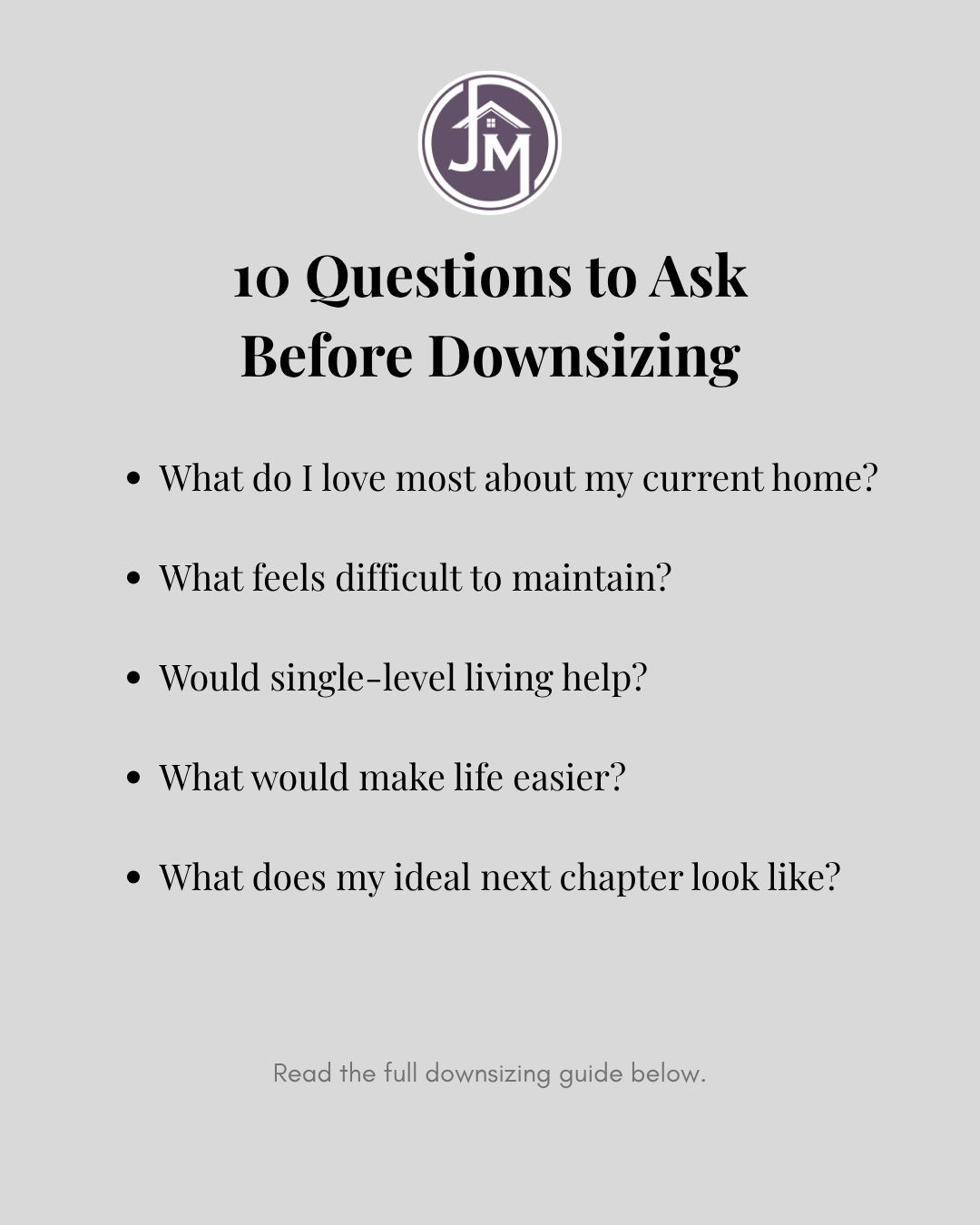
If you're beginning to think about making a move, these questions can help clarify your goals and priorities:
- What do I love most about my current home?
- What parts of homeownership feel difficult or stressful today?
- How much space do I actually use on a daily basis?
- Would a single-level home better meet my future needs?
- How important is being close to family, healthcare, shopping, or church?
- What monthly housing costs am I comfortable with?
- What activities would I enjoy more if I had less home maintenance?
- What belongings are most meaningful to me?
- If I stay where I am, what modifications might be needed in the future?
- What would an ideal next chapter look like?
The goal isn't simply to move into a smaller home. The goal is to create a lifestyle that supports your needs, priorities, and peace of mind for years to come.
Start Earlier Than You Think
One of the biggest challenges families face is waiting until a crisis forces a decision.
When a move is planned proactively, homeowners typically have:
- More housing options
- More control over the timeline
- Less stress and pressure
- Better financial planning opportunities
- More time to sort through belongings thoughtfully
Even if you're not planning to move for several years, starting the conversation now can help make future decisions much easier.
How to Begin the Decluttering Process
For many people, the thought of sorting through decades of belongings can feel overwhelming.
The good news is that downsizing doesn't have to happen all at once.
One of the simplest methods is the Four Box Method.
Label four boxes:
- Keep
- Donate
- Sell
- Discard
Then focus on one small area at a time.
Rather than attempting the entire house in a weekend, start with:
- Storage rooms
- Closets
- Guest bedrooms
- Garages
- Everyday living spaces
Many families find that even dedicating just fifteen to thirty minutes a few times a week creates meaningful progress over time.
Remember: progress is more important than perfection.
One Yakima Valley homeowner shared that she felt completely overwhelmed when she looked at her entire house and everything that needed to be done. Instead of focusing on the whole project, she committed to sorting just one drawer each day. Some days it was a kitchen drawer. Other days it was a single shelf in a closet. What felt impossible became manageable, and within a few months she had made significant progress without feeling exhausted or discouraged.
Downsizing doesn't have to happen all at once. Small steps taken consistently can make a tremendous difference over time.
Focus on Memories, Not Just Possessions
One of the most emotional parts of downsizing is deciding what to do with sentimental items.
It's natural to feel attached to family heirlooms, collections, photographs, furniture, and keepsakes that hold decades of memories.
Instead of focusing solely on what you're letting go of, consider ways to preserve the memories themselves:
- Take photographs of meaningful items
- Create memory albums
- Share family stories with younger generations
- Pass special heirlooms on intentionally
- Digitize old photographs and documents
A helpful perspective is this:
You are not getting rid of your memories.
You are simply choosing new ways to preserve and honor them.
What If Your Children Don't Want the Family Heirlooms?
This may be one of the most emotional aspects of downsizing.
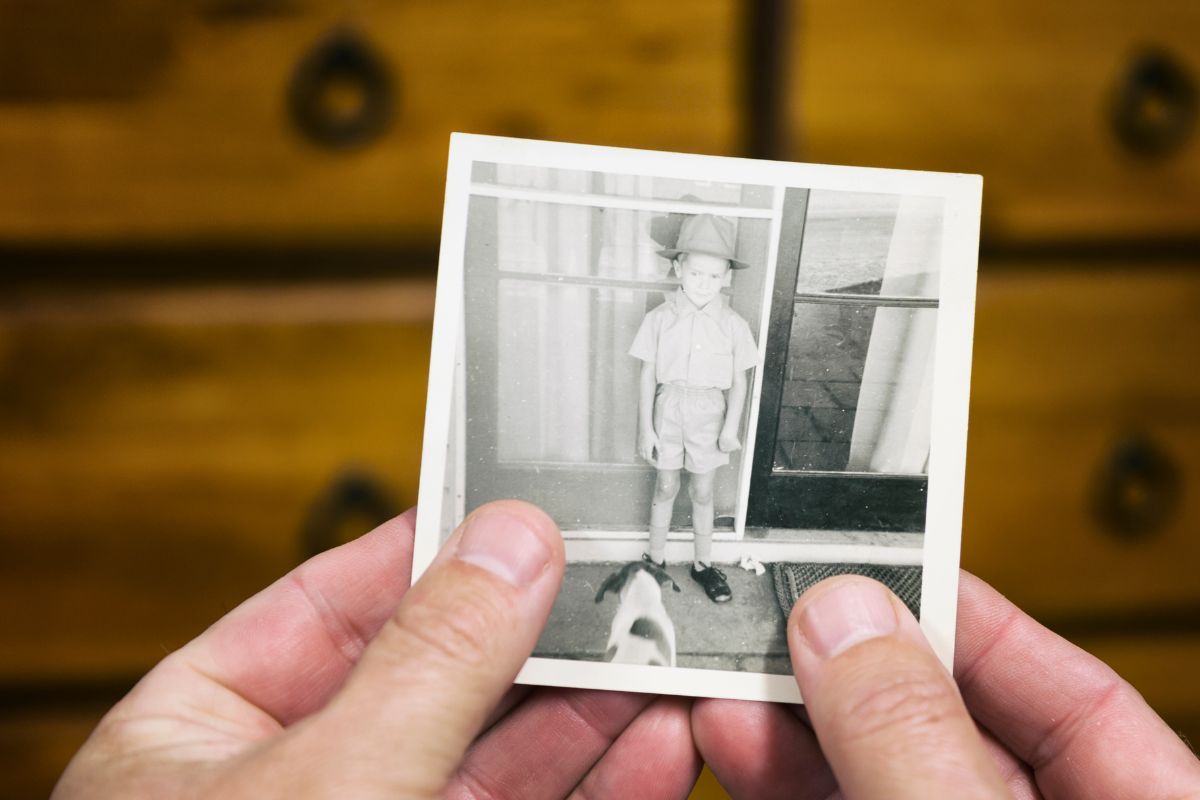
Many families have china cabinets filled with dishes passed down through generations, collections carefully assembled over decades, furniture built by grandparents, holiday decorations, photographs, keepsakes, and treasured family items.
Naturally, many parents assume these items will be passed on to their children.
Sometimes they are.
But often, adult children are already living in smaller homes, have different decorating styles, or simply don't have room for everything.
When that happens, it's important to remember:
The value of an heirloom isn't found in whether someone keeps the physical item.
The value is found in the memories, stories, and relationships connected to it.
Here are a few ideas that many families have found helpful:
Have the Conversation Early
Rather than guessing what family members may want, ask.
You may be surprised by which items hold meaning for them—and which do not.
Let Family Members Choose
Consider inviting children and grandchildren to select a few special items that genuinely matter to them.
Often one treasured item is more meaningful than receiving dozens of things they feel obligated to keep.
Share the Story
Sometimes the story behind an item is more valuable than the item itself.
Write a note, record a video, or tell the family history connected to a special heirloom.
Digitize What You Can
Old photographs, letters, recipes, and documents can often be scanned and preserved digitally for future generations.
Release the Guilt
This may be the hardest step.
Your children are not rejecting you if they don't keep every item.
Families today often live differently than previous generations.
Keeping a few meaningful treasures while letting go of others does not diminish the love, memories, or legacy attached to those items.
One family we worked with chose to photograph an entire collection that had been displayed in the home for over forty years. The photos were turned into a memory book that each child received. While the collection itself was eventually sold, the stories and memories were preserved for everyone.
Sometimes preserving the memory matters more than preserving the object.
Advice for Adult Children and Caregivers

If you're helping a parent or loved one navigate downsizing, remember that this transition can be emotional.
What may seem like "stuff" to one person often represents a lifetime of memories to another.
One of the most important things adult children can do is approach the conversation with patience and curiosity.
Avoid Saying:
- "You can't live here anymore."
- "You need to get rid of all this."
- "Nobody wants these things."
Instead Try:
- "How can I help?"
- "What would make life easier for you?"
- "What are your goals for the next few years?"
- "What would an ideal living situation look like?"
We often meet adult children who are worried about bringing up the conversation because they don't want their parents to feel pressured or hurt. In many cases, they discover their loved one has already been thinking about the same concerns but simply didn't know how to start the conversation.
Approaching the conversation with curiosity instead of urgency often leads to better outcomes for everyone involved.
What begins as a difficult discussion often becomes a meaningful opportunity to talk about future goals, independence, safety, and what matters most in the years ahead.
Creating a Downsizing Timeline
One reason downsizing feels overwhelming is because many people don't know where to start.
Breaking the process into manageable phases can help.
Six to Twelve Months Before Moving
- Begin decluttering
- Research housing options
- Meet with trusted professionals
- Discuss plans with family members
- Evaluate current home needs and repairs
Three to Six Months Before Moving
- Sell, donate, or gift unwanted items
- Begin preparing the home for sale
- Gather important paperwork
- Research movers and moving services
One to Three Months Before Moving
- Finalize housing plans
- Schedule movers
- Transfer utilities
- Pack non-essential items
- Create a moving day plan
Every situation is different, but having a roadmap can make the process feel much more manageable.
Local Yakima Valley Resources
Many families don't realize there are local organizations and professionals available to help with various aspects of downsizing.
Depending on your needs, resources may include:
Donation Opportunities
- Habitat for Humanity Store
- Yakima Union Gospel Mission Thrift Stores
- Love INC of Yakima County
These organizations often accept furniture, household goods, and other items that can benefit individuals and families in our community.
Estate Sale Services
Professional estate sale companies can help organize, price, market, and manage estate sales when families need assistance sorting through larger estates or collections.
Moving and Organization Professionals
Many local businesses specialize in helping seniors and families sort, organize, pack, move, and settle into a new home.
One of the benefits of working with experienced local professionals is having access to trusted resources and referrals when needed.
Exploring Housing Options
Downsizing doesn't necessarily mean moving into the smallest home possible.
In fact, many people discover that the goal isn't less space—it's the right space.
Options may include:
- Smaller single-level homes
- Condominiums
- Townhomes
- 55+ communities
- Independent living communities
- Assisted living communities
- Memory care communities
Every family has unique circumstances, priorities, and goals.
The best solution is the one that supports your lifestyle, health, finances, and long-term plans.
How a Senior Real Estate Specialist Can Help
Real estate transactions involving seniors often involve much more than buying and selling property.
They can include family conversations, estate considerations, housing transitions, caregiving concerns, timelines, and emotional decisions.
Joanne Melton is a Senior Real Estate Specialist (SRES®) and has spent nearly 30 years helping Yakima Valley families navigate these important life transitions.
As an SRES®, Joanne understands the unique challenges seniors and their families often face and can help connect clients with trusted local resources while providing guidance throughout the process.
Whether you're considering a smaller home, exploring senior living options, helping a parent prepare for a move, or simply beginning to ask questions, you don't have to navigate it alone.
A New Chapter, Not an Ending
For many people, downsizing represents far more than a move.
It can mark retirement, a change in health, the loss of a spouse, becoming an empty nester, or simply choosing a lifestyle with less maintenance and more freedom.
While these transitions can feel emotional, they can also create opportunities for new experiences, closer family connections, greater peace of mind, and a home that better fits your current season of life.
At the Joanne Melton Real Estate Team, we've been honored to walk alongside many Yakima Valley families during these important transitions.
As a Senior Real Estate Specialist (SRES®), Joanne understands that these decisions involve much more than buying and selling property. They involve memories, family relationships, future plans, and finding confidence in what comes next.
If you're beginning to explore your options—or simply have questions—we'd be honored to be a resource.
Learn More About Joanne's Senior Real Estate Specialist Services
No pressure. No obligation.
Just trusted guidance, local knowledge, and a team that cares about helping you make informed decisions for the next chapter of life.
Joanne Melton
Managing Broker | REALTOR® | Joanne Melton | Keller Williams Yakima Valley
or another way